TREADNORTH / LAWN PROTECTION
How to Protect a Lawn from Excavators (and Still Get the Job Done)
Plan the access. Protect the working area. Leave less to repair when the equipment goes home.
Published November 18, 2026 · TreadNorth Mats
A finished lawn is the first thing a homeowner sees when equipment arrives—and one of the last things they want to rebuild after the job. Whether you’re installing a septic system, landscaping a backyard, or bringing materials through a narrow side yard, ground protection starts before the first machine crosses the grass.
One yard. Three stages.
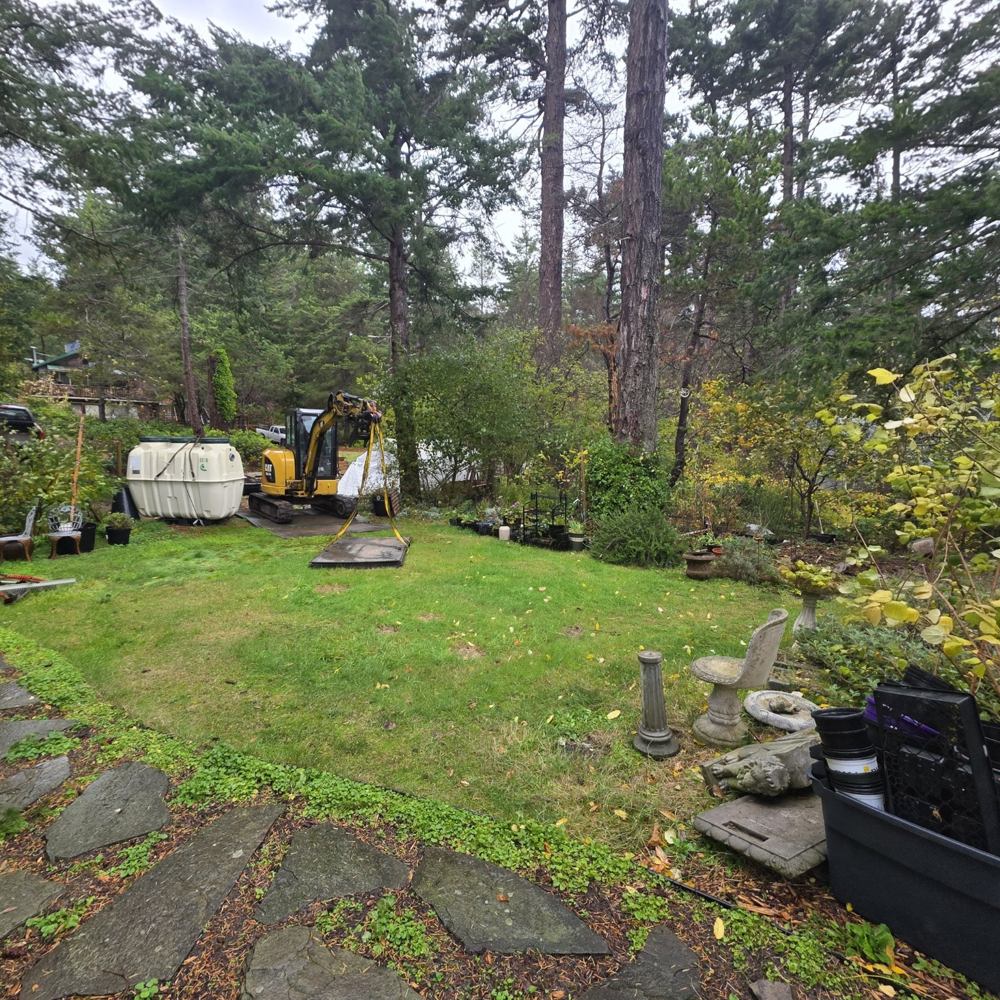 BEFORE
The lawn before installation, with the white treatment tank on site.
Why an access plan matters
Repeated trips and turns can leave a bigger mark than the excavation itself. A machine may follow the same route dozens of times while moving soil, tanks, gravel, and tools. Wet ground makes that traffic harder on a finished yard.
A planned mat route helps keep equipment on a defined path and separates tracks and wheels from the grass. Mats also give you a surface for temporary soil storage, making it easier to pick material back up without scraping it out of the lawn.
Lay out the route before unloading
Walk from the unloading point to the work area. Measure the narrowest gate, check corners and slopes, and allow room for the machine’s full width and turning movements. Choose a practical route with as few turns as possible.
Include the working and staging areas in the plan. Protecting the access lane alone leaves the lawn exposed wherever the excavator turns, materials are set down, or soil is piled.
Prepare an even, supported surface and use the mat manufacturer’s placement and connection instructions. Check mat position as work progresses, especially at turns and transitions.
How many mats do you need?
A 4′ × 8′ mat covers a nominal 32 square feet. For a simple full-width layout, a 40-foot-long by 8-foot-wide route uses ten mats, with each mat placed 8 feet across and 4 feet along the route. That is a starting layout, before allowing for connections, turns, staging areas, and any additional width the equipment needs.
Measure the actual route and sketch the layout before ordering. A straight lane and a backyard with tight turns will use mats differently, even when the travel distance is the same.
Keep excavated soil off the grass
The during photo shows excavated soil contained on black mats beside the machine. Keeping that material separate from the lawn makes cleanup more straightforward: remove the soil, lift the mats, and rake the area.
The after photo shows the yard once the equipment and mats have been removed. Some bare patches remain visible. Ground protection helps reduce disturbance; the finished result still depends on the starting lawn, weather, soil conditions, equipment, and how the job is carried out.
Work with the ground conditions
Mats are part of the access plan. They do not turn saturated soil into a firm road or guarantee that every machine can cross safely. Equipment weight, loaded wheel or track pressure, the supporting ground, and placement all affect suitability.
Keep movements controlled, minimize sharp turns, and reassess if mats shift or the ground starts to deform. Plan the job around the conditions you find on site.
Reusable mats for the next job, too
After cleanup, mats can be collected and stacked for the next project. For contractors who regularly cross finished yards, it makes sense to include access protection in the job plan and quote from the beginning.
Comparing options? Read our plywood versus ground protection mats comparison for a look at handling and repeat use.
TreadNorth mat pricing
TreadNorth supplies 4′ × 8′ × 10 mm HDPE ground protection mats on Vancouver Island, with built-in handholds and diamond-plate tread.
| Order quantity | Price per mat |
|---|---|
| 1–9 mats | $175 |
| 10–24 mats | $160 |
| 25+ mats | $155 |
Pickup in Coombs–Hilliers by arrangement. Delivery is quoted separately. Confirm availability and suitability for your equipment when requesting a quote.
Common questions
Will mats prevent all lawn damage?
No. They help protect the surface and manage access, but soft ground, turning, repeated traffic, and extended coverage can still affect the lawn. Plan for the site conditions and inspect as you work.
Can I use them for a backyard septic installation?
The photos above show that application: access and temporary soil storage during a backyard installation. Select the layout around the machine, work area, and ground conditions.
What should I include in a quote request?
Send your location, approximate route length and width, equipment type and operating weight, expected mat quantity, and whether you need pickup or delivery. Photos of the route help show corners, slopes, and tight access.
Plan the protection before the machine arrives.
Tell us about your access route and equipment, and we’ll help put a mat order together.